
Introduction
Sleep is one of the most powerful yet underrated pillars of human health. We spend nearly one-third of our lives sleeping, and still, many people struggle with poor sleep quality, fatigue, and lack of energy. While factors like mattress quality, stress levels, and lifestyle habits are often discussed, one subtle yet impactful aspect is often ignored—the direction in which we sleep.
The question in which direction we should sleep has been discussed for centuries across cultures. Ancient Indian traditions like Vastu Shastra and Chinese practices like Feng Shui emphasize directional alignment for better energy flow. Surprisingly, modern science also offers explanations that support some of these age-old beliefs.
In this detailed guide, we’ll explore everything you need to know about sleeping direction—its benefits, scientific reasoning, traditional insights, and how you can apply it in your daily life for better rest and overall well-being.
Why Sleeping Direction Plays a Crucial Role in Sleep Quality

The direction in which you place your head while sleeping may seem like a minor detail, but it can influence your physical and mental state more than you think. The Earth has a natural magnetic field that runs from north to south, and your body, particularly your brain and blood circulation system, can respond to this field.
When your body aligns with this magnetic field in a harmonious way, it may help promote relaxation and deeper sleep. On the other hand, misalignment might lead to subtle disturbances that affect your sleep cycle.
This is why understanding in which direction we should sleep becomes important—not just from a traditional perspective, but also from a physiological one. Even if the effects are not dramatic overnight, consistent alignment can lead to noticeable improvements over time.
Understanding the Four Main Sleeping Directions
Before deciding the best direction, it’s essential to understand how each direction may influence your body and mind. Each orientation—north, south, east, and west—has its own set of beliefs, interpretations, and potential effects.
Sleeping with Head Towards South
Sleeping with your head pointing south is widely considered the most beneficial direction. This recommendation is strongly supported by Vastu Shastra and is often associated with stability and grounding.
When your head is towards the south, your body aligns naturally with the Earth’s magnetic field. This alignment is believed to reduce pressure on the brain and improve blood circulation. As a result, your body can relax more efficiently, leading to deeper and more restorative sleep.
People who adopt this sleeping direction often report feeling calmer, more refreshed, and mentally clear upon waking. Over time, this can contribute to better emotional balance and reduced stress levels.
For anyone wondering in which direction we should sleep, the south-facing position is often the safest and most recommended choice.
Sleeping with Head Towards East
The east direction is another highly favorable option, especially for individuals seeking mental clarity and productivity. Traditionally, east is associated with the rising sun, symbolizing new beginnings, energy, and growth.
Sleeping with your head towards the east is believed to enhance memory, concentration, and overall mental performance. This is why students and professionals are often encouraged to adopt this direction.
While it may not provide the same grounding effect as the south direction, it still supports a balanced and positive state of mind. Many people find that east-facing sleep helps them wake up feeling more motivated and alert.
If you’re still deciding in which direction we should sleep, east can be considered an excellent alternative to south.
Sleeping with Head Towards West
The west direction is generally seen as neutral. It is neither strongly recommended nor strictly discouraged. However, some traditions suggest that sleeping with your head towards the west may lead to increased mental activity during sleep.
This could result in more dreams or slightly restless sleep for some individuals. That said, the effects are not universally negative, and many people sleep comfortably in this position without any noticeable issues.
If your room layout makes it difficult to sleep in the south or east direction, west can be an acceptable compromise. It may not offer the same benefits, but it is unlikely to cause significant harm.
Sleeping with Head Towards North
Sleeping with your head towards the north is generally discouraged in many traditional systems. The reasoning behind this is tied to the Earth’s magnetic field and its interaction with the human body.
It is believed that when your head points north, it may create a form of magnetic repulsion that disrupts blood circulation and increases pressure on the brain. This could potentially lead to disturbed sleep, headaches, or feelings of restlessness.
While scientific evidence is still evolving, many experts advise avoiding this direction as a precaution. If you are serious about optimizing your sleep, it’s best to steer clear of north-facing sleep whenever possible.
So, when evaluating in which direction we should sleep, north is typically the least recommended option.
Comparison Table: Effects of Sleeping Directions
| Direction | Overall Recommendation | Key Benefits | Possible Drawbacks |
|---|---|---|---|
| South | Highly Recommended | Deep sleep, better circulation, calm mind | None significant |
| East | Recommended | Improved focus, positivity, mental clarity | Slightly less grounding |
| West | Neutral | Acceptable alternative, flexible option | May cause mild restlessness |
| North | Not Recommended | No major benefits | Poor sleep, stress, headaches |
Scientific Explanation Behind Sleeping Direction
While traditional systems provide valuable insights, it’s important to explore what modern science says about sleeping direction.
The Earth’s magnetic field plays a subtle but important role in how your body functions. Human blood contains iron, and although it’s not magnetic in the traditional sense, it can still be influenced by electromagnetic forces.
Some researchers suggest that sleeping with your head towards the north may interfere with natural circulation patterns. This could lead to slight imbalances in oxygen flow to the brain, potentially affecting sleep quality.
Additionally, the brain is highly sensitive to environmental factors. Even minor disruptions in alignment or energy flow can influence how easily you fall asleep and how deeply you rest.
Although more research is needed, these findings provide a reasonable explanation for why certain directions are preferred over others.
Vastu Shastra: Ancient Wisdom on Sleeping Direction
Vastu Shastra, an ancient Indian architectural science, places significant emphasis on the direction of sleep. According to Vastu principles, the human body is deeply connected to natural forces, including the Earth’s magnetic field.
South-facing sleep is considered ideal for adults because it promotes stability and long-term health. East-facing sleep is recommended for students and individuals involved in intellectual work, as it enhances mental clarity.
North-facing sleep is discouraged, especially for adults, as it is believed to disrupt harmony and create imbalance in the body.
Vastu also emphasizes the importance of a well-organized bedroom, free from clutter and negative energy. The placement of furniture, lighting, and even colors can influence how well you sleep.
When combined with the right direction, these elements can create a peaceful and rejuvenating sleeping environment.
Feng Shui Perspective on Sleeping Orientation
Feng Shui, a traditional Chinese practice, also highlights the importance of alignment and energy flow in the bedroom. However, it focuses more on the concept of “Chi” or life energy rather than magnetic fields.
According to Feng Shui, your bed should be positioned in a way that allows energy to flow freely around you. While direction is important, factors like bed placement, room layout, and surrounding objects are equally significant.
For example, placing your bed against a solid wall provides a sense of security and stability. Avoiding direct alignment with doors or windows helps maintain a calm and uninterrupted energy flow.
Although Feng Shui does not strictly prohibit certain directions, it encourages harmony between your body and your environment.
How Sleeping Direction Influences Overall Health
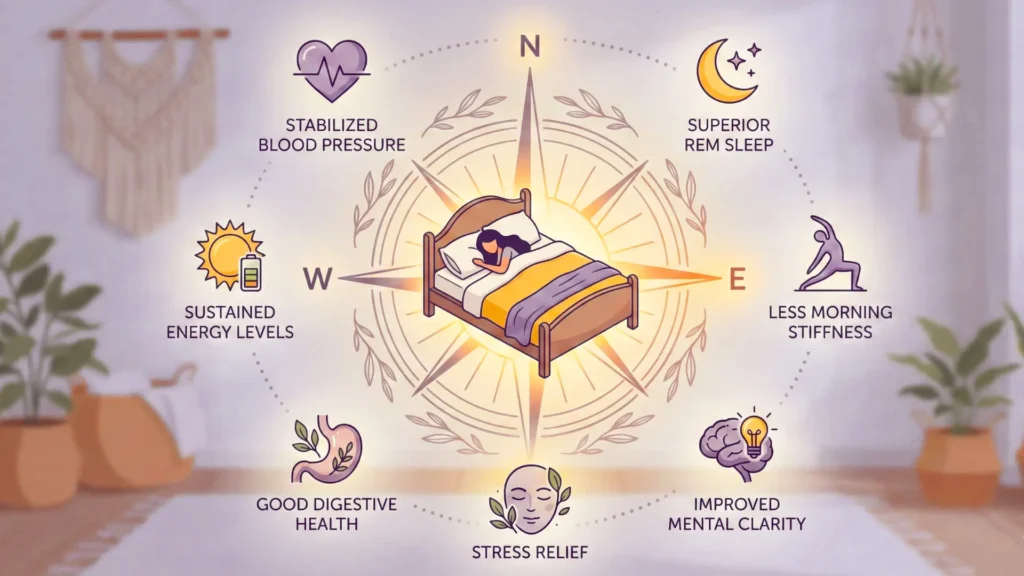
Your sleeping direction can have subtle yet meaningful effects on your physical and mental health. While it may not be a cure-all solution, it can enhance the effectiveness of other healthy habits.
Proper alignment can improve blood circulation, allowing oxygen and nutrients to reach your brain more efficiently. This can lead to better cognitive function, improved mood, and reduced fatigue.
It can also influence your stress levels. A well-aligned sleeping position helps your body relax more deeply, reducing the production of stress hormones.
Over time, these small improvements can add up, leading to better overall well-being. This is why the question in which direction we should sleep is worth considering seriously.
Practical Tips to Align Your Sleeping Direction

Changing your sleeping direction doesn’t have to be complicated. Start by identifying the orientation of your room using a compass or a smartphone app.
Once you know the directions, adjust your bed so that your head points towards the south or east. If moving your bed is not possible, try repositioning your pillow instead.
It’s also important to maintain consistency. Give your body time to adapt to the new alignment and observe any changes in your sleep quality.
Combine this adjustment with good sleep habits, such as maintaining a regular sleep schedule, avoiding heavy meals before bedtime, and keeping your bedroom calm and comfortable.
Common Misconceptions About Sleeping Direction
There are several myths surrounding sleeping direction, and it’s important to separate fact from fiction.
One common belief is that direction alone can solve all sleep problems. In reality, it is just one of many factors that influence sleep quality.
Another misconception is that north-facing sleep is dangerous in all situations. While it is generally discouraged, it is unlikely to cause severe harm in the short term.
Understanding these nuances can help you make informed decisions without unnecessary fear or confusion.
Quick Answer for Best Sleeping Direction
Best Direction: South
Second Best Option: East
Neutral Direction: West
Avoid If Possible: North
FAQs About Sleeping Direction
Which direction is best for sleeping?
South is widely considered the best direction for deep and restful sleep.
Is east-facing sleep good?
Yes, it promotes mental clarity, focus, and positive energy.
Why should we avoid north direction?
It may disrupt magnetic alignment and affect sleep quality.
Can sleeping direction affect health?
Yes, it can influence circulation, stress levels, and overall restfulness.
What if I cannot change my sleeping direction?
Choose the closest possible option and focus on improving other sleep habits.
Conclusion: Small Change, Big Impact on Your Sleep
Understanding in which direction we should sleep can be a simple yet powerful step toward improving your quality of life. While it may seem like a small detail, it has the potential to influence your sleep, health, and overall well-being.
By aligning your sleeping position with natural forces, you can create a more harmonious environment for rest and recovery. Whether you choose south for stability or east for clarity, the key is consistency and awareness.
Start making this change today. Observe how your body responds, and combine it with healthy sleep practices for the best results. Sometimes, the simplest adjustments can lead to the most meaningful improvements.
Read More:-Magnesium for Better Rest: Natural Ways to Improve Sleep